
One day a group from a local chapter of the Mensa society had its monthly meeting in a restaurant.
Mensa is the world’s largest, oldest and most famous high-IQ society – a thriving global community of 150,000 highly intelligent people.
Only those who have an intelligence quotient in the top 2 percent are considered for membership.
At table, “Look!” one member said. “Someone must have played a prank. The salt is in the pepper shaker and the pepper is in the salt shaker”.
How to return the salt to the salt shaker and the pepper to the pepper shaker – the fastest and the least messy way – became the topic of discussion during the meeting.
Those attending came up with a six-step process to correct the shaker issue.
They were beaming with pride in their accomplishment as a representative presented the fruit of their deliberations and discussions to a waitress.
“Ma’am, we have a problem here. The salt is in the pepper shaker and the pepper is in the salt shaker. But don’t worry, we have come up with a process to correct the problem,” the representative told a waitress.
“Oh yeah? I can correct the problem in a second without looking at your recommendations,” she responded while transferring the lid with “salt” written on it to the salt shaker and the “pepper” lid to the pepper shaker.
Then she went back to the kitchen. “Those people at Table 8 are idiots,” she told her manager.
This is a joke. If your IQ is in the top 2 percent, or if you are a proud member of Mensa, please forgive me. I know God has gifted you with a sharp brain for a purpose and for God’s glory.
It is amazing how God had designed his creation to keep it going. He gifted human beings with a variety of talents and abilities for the healthy functioning of society.
Society is like our body. It has different parts. Each has its own function.
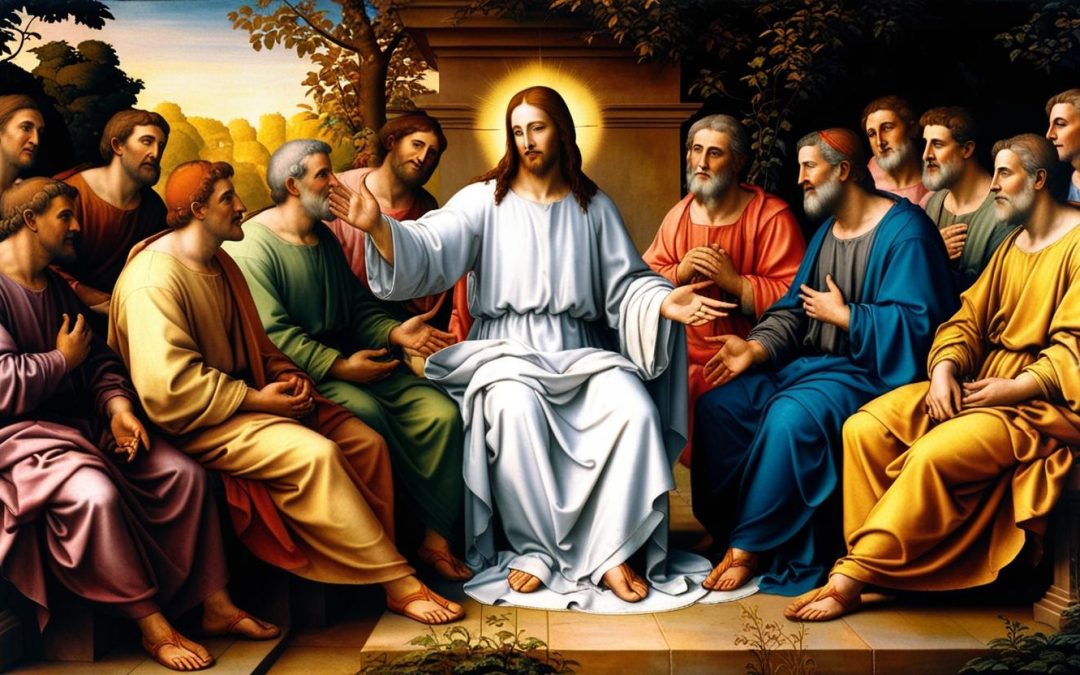
Jesus chose 12 apostles with different talents and abilities for a healthy functioning of the group. Each personality had a purpose.
Peter’s personality could be described as confident and decisive. He was a man of action, ready to go at any moment. Peter made decisions without weighing the pros and cons.
Thomas was the opposite. He analyzed situations before making decisions.
Someone called him “doubting Thomas” and the nickname stuck.
It is true that Thomas at first questioned and doubted the resurrection of Jesus.
But something about his questioning had to do with more than doubt.
Even before the resurrection, Thomas was known to question things he did not understand.
One day, Jesus was talking about a home He was going to prepare for them.
It was not easy for Thomas to grasp the imagery. He tried his best but could not do it.
While Thomas was trying to figure it out, Jesus told the disciples, “You know the way where I am going.”
Thomas looked around at the blank faces of the disciples and burst out candidly, “Lord, we do not know where you are going. How can we know the way?” (John 14:1-5).
Thomas did not mind speaking his mind.
On another occasion, Jesus told his disciples they were going to Bethany, near Jerusalem, to see his friend Lazarus, who was dead and already buried.
Thomas could not see the purpose of going there. “Why should we go to Jerusalem? Last time we were there they tried to kill Jesus,” Thomas probably thought.
But after a few more thoughts, Thomas changed his mind. “Let us go and die with Him!” Thomas said. (John 11:1-6).
Thomas had spent his life waiting for the Messiah and now the Messiah had come. Thomas was willing to give his life for the Messiah.
Thomas was always loyal to Jesus, though he did not always understand Jesus’ words and actions.
His loyalty could have been why Thomas was not in the Upper Room when Jesus appeared to the Apostles for the first time after his resurrection.
Thomas took Jesus’ death pretty hard.
Even though Thomas did not understand everything Jesus was telling the Apostles, he had been willing to die with Jesus. However, Thomas did not expect Jesus to die so soon. He did not expect Jesus to die prematurely. As a result, he was left with many unanswered questions.
When the other Apostles told Thomas that Jesus had risen, he did not believe them. Jesus’ coming back to life was too far-fetched for him.
Thomas did not want to set himself up for another disappointment, so perhaps that was why he was not in the Upper Room. For Thomas, one disappointment was enough.
And yet Thomas’ loyalty to Jesus made him yearn to believe. As long as there was the slimmest thread of hope, Thomas wanted to be counted in.
Thomas had to deal with an inner struggle. He was so honest about life that he did not want to be gullible, yet he was too loyal to be unfaithful.
In the end, this honest devotion to Jesus caused Thomas to utter this now-famous condition: “Unless I see the nail marks in His hands and put my fingers in wounds on His side, I will not believe it!” (John 20:25).
Thomas did doubt, but his doubt did not come from timidity or distrust.
Thomas’ doubt came from a reluctance to believe in the seemingly impossible and from the simple fear of being hurt twice.
Most of us are like Thomas and find it difficult to believe the unbelievable.
We tend to scrutinize life and take cautious steps.
It is hard to imagine that God can surprise us. We tend to think that it is not sound thinking to expect a miracle.
As a result, like Thomas, we find it hard to believe that God can do the very thing He is best at – replacing death with life.
We tend to dismiss things that are not probable. In doing so, we let our dreams fall victim to doubt.
We make the same mistake as Thomas. We forget that “impossible” is one of God’s favorite words.
Thomas said he would believe if he could just have a little proof.
Jesus gave Thomas exactly what Thomas wanted. Jesus extended His hands one more time, and was Thomas ever surprised.
Thomas fell flat on his face and cried, “My Lord and my God!” (John 20:28). And Jesus must have smiled.